Virtual Closet
See it in motion.
The screen on the right is a snapshot of the actual working prototype — open it full-screen to browse the OOTD recommendations, check the Weekly Style Planner, and try the sustainability score for yourself.
Open full-screen ↗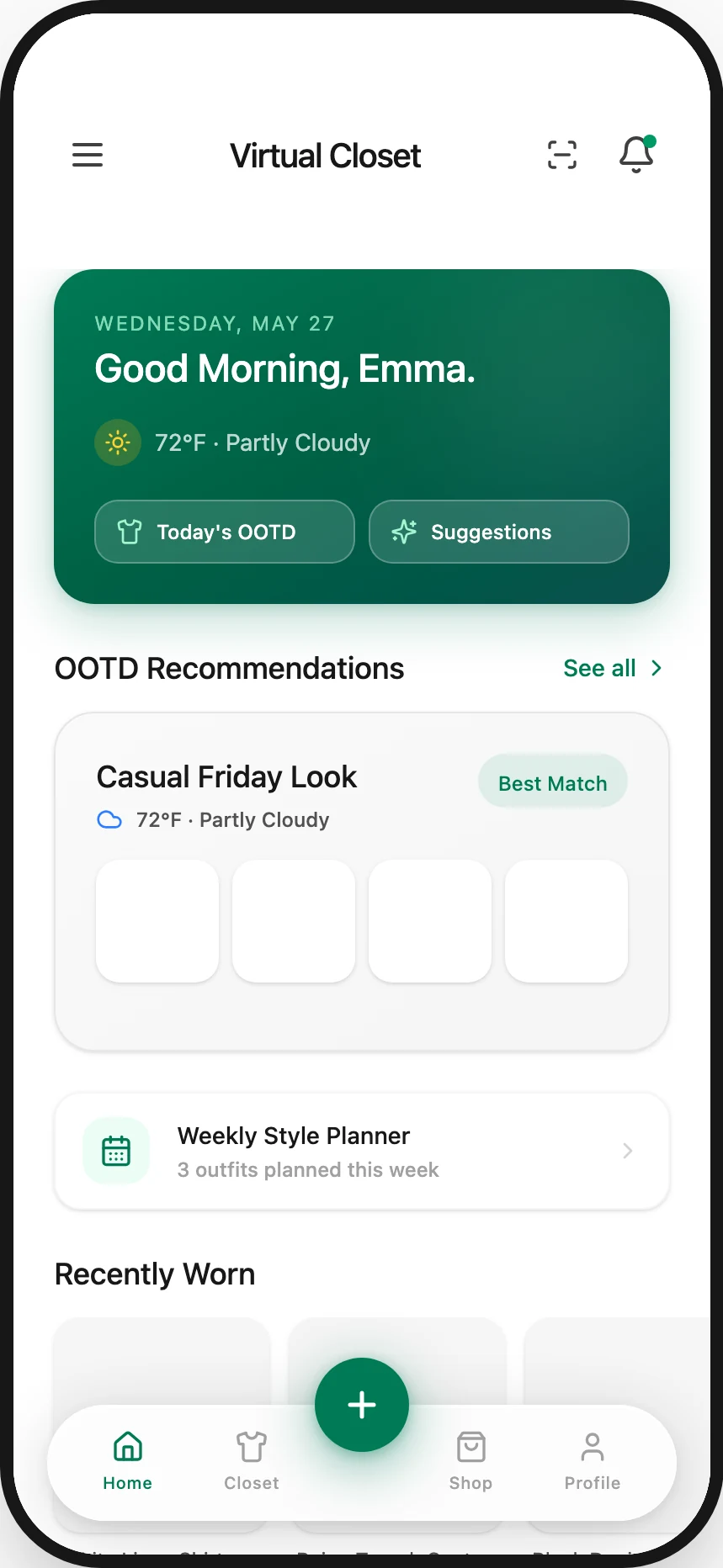
A mobile ecosystem connecting active wardrobe management, contextual outfit planning, and friction-free shopping in one place.
The project paused between those two working periods for a CSL Behring graphic design internship, then resumed in April 2026.
Users regularly wear fewer than half the items in their closets. That gap drives daily decision fatigue and outfit-coordination anxiety.
Dashboard split into two zones — Upload Clothes and Get Outfit Suggestions — to separate passive wardrobe management from active decision-making. Added an Outfit of the Day module using live weather data so suggestions felt contextually relevant rather than generic.
Early plans included a 3D Virtual Try-On avatar simulator. I parked it deliberately (kept as a future-tier placeholder) to protect quality on three core pillars: closet logging, outfit matching, and sizing trust.
Sizing recommendations are grounded in the user's own closet brands (not abstract percentages), reframing an ML calculation into personal, trustworthy advice.
Learned to ruthlessly prioritize fixes by impact (11 friction points trimmed to 5), document design rationale in real time, over-recruit for usability sessions, and treat intentional omission as a design skill, not a shortfall.